Your MRCGP
AKT
Revision
Partner.
From the makers of SCA Revision.
Don’t just test yourself for the AKT. Get taught.
AKT Revision teaches each topic from the basics, with audio lessons and films that make even statistics click. The questions adapt to what you get wrong, and a tutor sits beside every answer.
Menopause
Women’s health · 1 of 5 skills done
What menopause is
Done
Continue
Who it affects & how it presents
Diagnosis & investigation
Locked
HRT: choosing & prescribing
Locked
Module exam
Menopause
AKT Tutor
Grounded in 750+ guideline-checked fact sheets
Today’s plan · Tuesday
Finish: Menopause, skill 2
Learn · about 8 minutes
10 new questions
Focus: Cardiovascular health
7 smart review questions
3 confident misses from Sunday are due
Readiness
vs RCGP published pass mark
Weakest: Prescribing · Statistics — both have a Learn course queued.
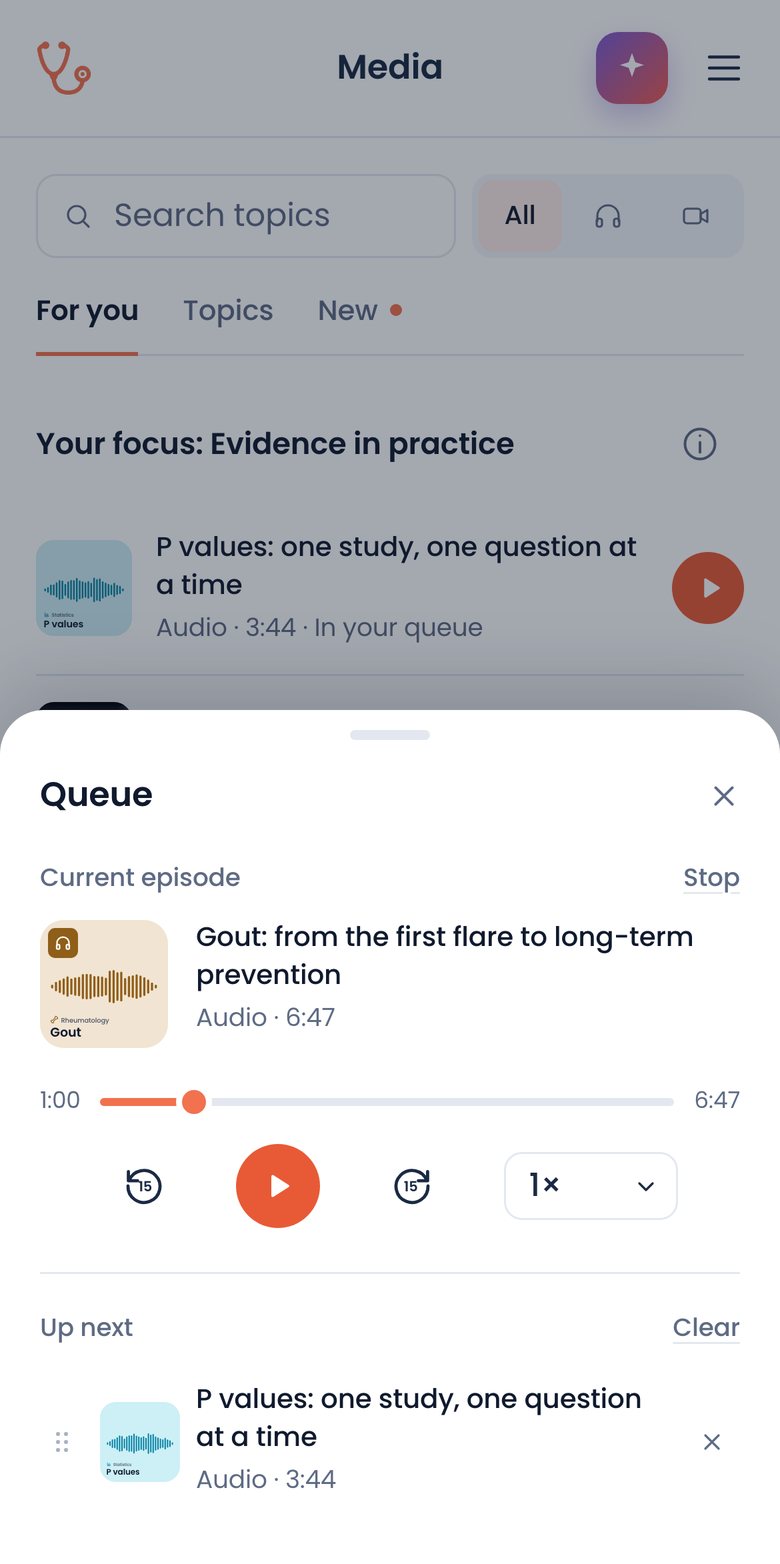
Free to listen now
Your AKT revision plan
Seven minutes on how the exam works, where people lose marks and how to plan your revision.
Lucy and Ollie talk you through it
Each episode takes one topic and talks it through the way a good trainer would, including the mistakes the exam is waiting for you to make.
284 episodes across 15 subjects. The introduction is free to play now.
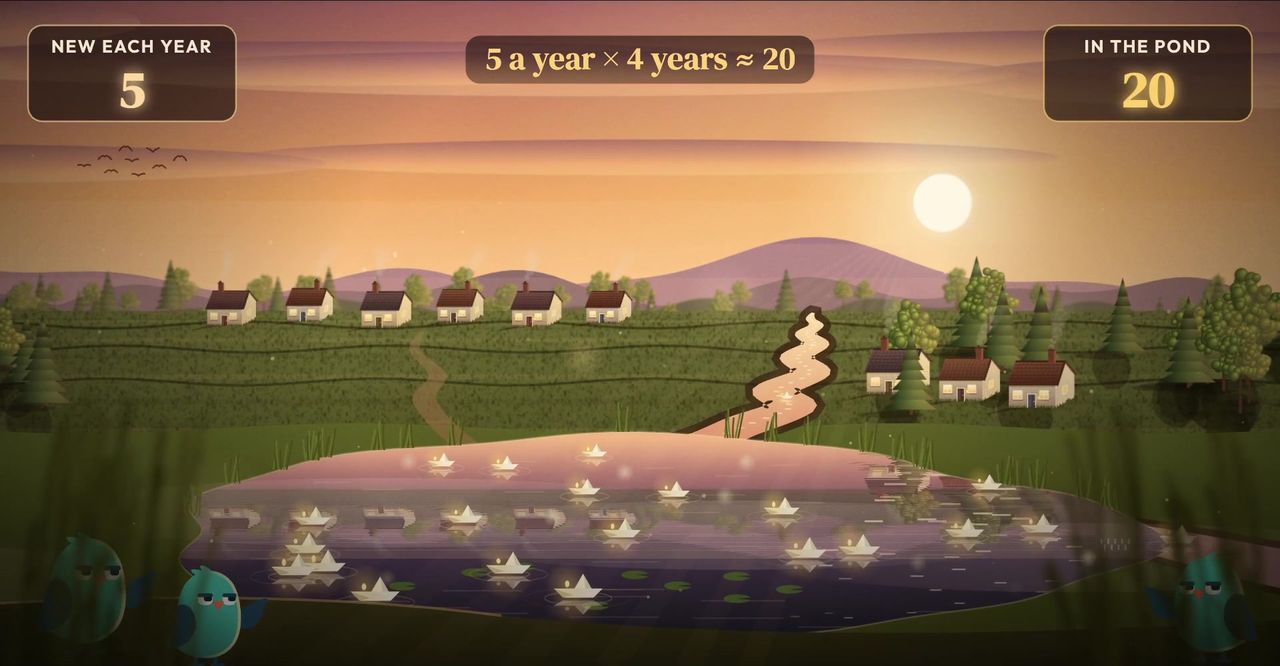
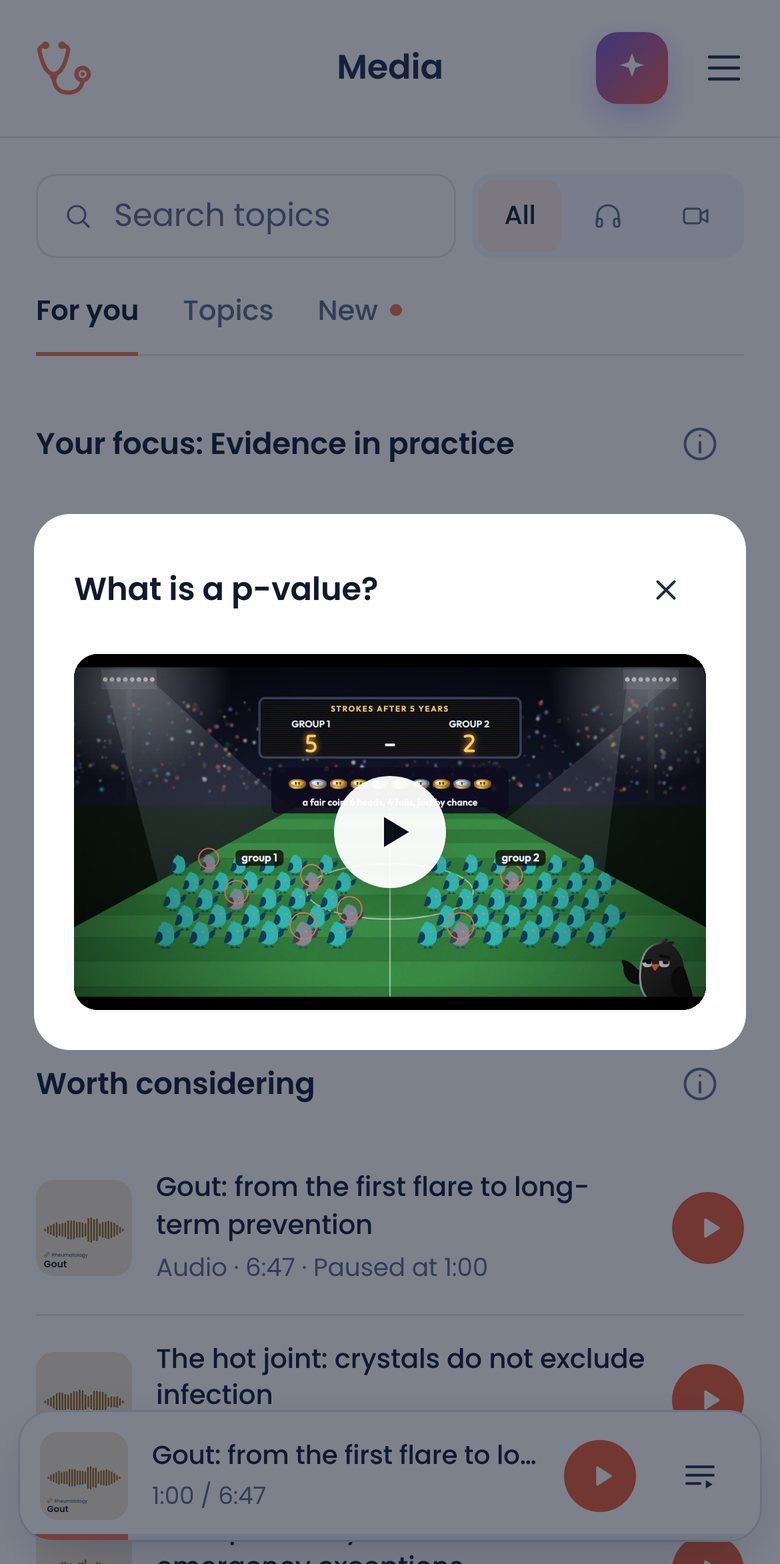
Statistics that finally make sense
Short animated films turn p-values, NNT and prevalence into stories you can picture, from a coin toss in a Wild West saloon to a village pond filling with new cases. You’ll remember the picture when the question comes up.
11 films so far, all on statistics. Watch them free for 72 hours
Too many questions.
Too little time.
No direction.
- ✗A huge curriculum. Not enough time.
- ✗Sixty questions tonight. Forgotten by Friday.
- ✗No idea what to revise next.
- ✗Marked, then left on your own.
Every answer
feeds a plan.
- ✓Questions that return before you forget.
- ✓Wrong answers lead to the right lesson.
- ✓A tutor for every “but why?”
- ✓Know exactly how ready you are.
From the team
who’s done this before.
- ✓The team behind SCA Revision.
- ✓Nearly 10,000 registrars helped.
- ✓Same GPs. Same standards.
- ✓Now pointed at the AKT.
Your plan
One day at a time.
10 new questions
Focus: Cardiovascular health
7 smart reviews
Timed to return before you forget
2 confident-wrong answers
They jump the queue — they fail exams
Read: DVLA reference card
Linked from yesterday's miss
Next course: Statistics & EBM
Recommended from your weak areas
Judged against the RCGP’s published pass marks — never a hunch.
Start where your knowledge actually is.
No bank can teach you a topic you never learned. AKT Learn’s 18 courses assume nothing — short slides, then practice, then a topic exam before the next skill unlocks.
- ✓1,000+ skills across 194 topics, 15,000+ practice questions behind them.
- ✓Aimed at the persistently-failed areas: prescribing, neurology, statistics, dilemmas.

Menopause
1 of 5 skills done
What menopause is
Done
Continue
Who it affects & how it presents
Diagnosis & investigation
Locked
HRT: choosing & prescribing
Locked
Module exam
Menopause
Questions that notice how you got it wrong.
7,000+ exam-style questions, checked against current UK guidance. Mark each answer Sure, Think so or Guessing — confident mistakes come back first, because they’re the ones that fail exams.
- ✓Every question type in the paper, each with why-right-why-wrong feedback.
- ✓Real-format 160-in-160 mocks with pacing feedback and a topic debrief.
Smart review · what comes back and when
Stuck? Ask, right there.
A tutor docked inside every answered question and every Learn topic. Short, UK-specific answers grounded in our 750+ guideline-checked fact sheets — never a chatbot’s imagination.
- ✓Powered by GPT-5.6. Set up to teach — not to guess.
- ✓Grounded in current UK guidance. Every answer draws on our 750+ checked fact sheets, built from NICE, CKS, BNF and SIGN.
- ✓Included in your membership. 300 messages every month at no extra cost.
AKT Tutor
✕A question bank vs. AKT Revision
72 hours on us.
No card needed.
We’d rather you felt it than took our word for it. Finish a Learn module, watch the questions adapt, ask the tutor something you’ve always wondered. If it isn’t for you, there’s nothing to cancel.
- ✓Just an email to start. Nothing is charged unless you choose a plan.
- ✓Everything you do carries straight into your membership.
- ✓One membership, everything included, from £8.33/month.
Fact sheet · Cardiovascular health
AF: anticoagulation decisions
When to anticoagulate
Offer anticoagulation when CHA₂DS₂-VASc is 2 or more; consider it for men scoring 1. Assess bleeding risk with ORBIT — but a high score prompts modification of risk factors, not automatic withholding.
DOACs first line — apixaban, edoxaban, rivaroxaban or dabigatran.
Warfarin only when DOACs are contraindicated or unsuitable.
Reference card
Anticoagulation & DOACs
Keep going
Practise this sheet →
Questions, answered.
The short version: built for the new exam, priced simply, honest about the numbers.
How much does it cost?+
One membership includes the full Question Bank, all Learn courses, fact sheets, timed mocks and an AI tutor with 300 messages per paid month. Choose £11.99 billed monthly, £30 paid upfront for three months (£10/month equivalent), or £50 paid upfront for six months (£8.33/month equivalent). The prepaid options expire automatically without renewal. Eligible new members can explore for 72 hours without a card. Monthly members can cancel future payments any time and optionally add Unlimited AI for £5/month.
How does the free trial work?+
Create your account, confirm your email and start your 72-hour trial when you are ready. No card needed. Open up to 30 Question Bank questions per rolling 24 hours, choose one complete Learn course for the whole trial, and send 10 AI tutor messages in total. Full Question Bank mocks require paid membership. Nothing is charged automatically; upgrade whenever you are ready.
What's the difference between the Question Bank and AKT Learn?+
The Question Bank tests and tracks: 7,000+ exam-style questions scheduled by the learning engine, with mocks and progress. AKT Learn teaches: 18 structured courses that build every topic from the basics up, lesson by lesson, with streaks and unlocks. AKT Revision brings both together. Quiz and completed mock results identify your AKT weak areas and can surface a matching Learn course. Your Learn activity controls where you resume and what Learn reviews next, but it never changes your AKT score or question practice.
What does the AI tutor do?+
After any question — or inside any Learn topic — you can ask follow-ups: why an option is wrong, what a term means, how a guideline applies. Answers are short, UK-specific and grounded in our own fact sheets rather than the open internet. The AI tutor is included with every paid membership, with a fair-use allowance of 300 messages per month. Need more? Rolling monthly members can add Unlimited AI for £5/month. The 72-hour free trial includes 10 messages in total.
Is it built for the new exam format?+
Yes. From October 2025 the AKT is 160 questions in 160 minutes (80% clinical, 10% evidence and statistics, 10% organisation). The question styles, mocks, pacing feedback and readiness benchmarks all assume that format.
Where do the questions come from?+
Our GP-led editorial process uses UK guidance, with AI-assisted drafting and review. Sources are cited so you can check the reasoning. Reports enter our review queue; questions with three independent open reports are temporarily withdrawn. For a serious clinical concern, contact support directly.
How is this different from other AKT banks?+
The learning engine. Spaced repetition decides what knowledge should be tested next; confident errors rise first, while secure material retires. Reviews can use a fresh question on the same clinical idea so you learn the medicine rather than an answer letter.
I'm an SCA Revision member — is this included?+
AKT Revision is a sister product with its own subscription — most trainees sit the two exams at different stages. Same team, same standards, separate product.
Are you affiliated with the RCGP?+
No — AKT Revision is independent and not affiliated with or endorsed by the RCGP. Exam-format facts and pass marks quoted on this page come from the RCGP's published feedback reports.
What devices does it work on?+
Any modern browser on phone, tablet or computer. It's built for revision in the gaps — ten questions on a break works as well as an evening session at a desk.
Your plan for today is waiting.
Create your account and explore for 72 hours without a card. Choose paid membership when you are ready.